
Tucked between the mountains and the Sea of Japan, Kanazawa is a gem that rewards visitors with a castle, a world-famous garden, and a feel of old Japan that many bigger cities lost long ago. We only had one day there but managed to visit its two best-known landmarks: Kanazawa Castle and the adjoining Kenrokuen Garden.
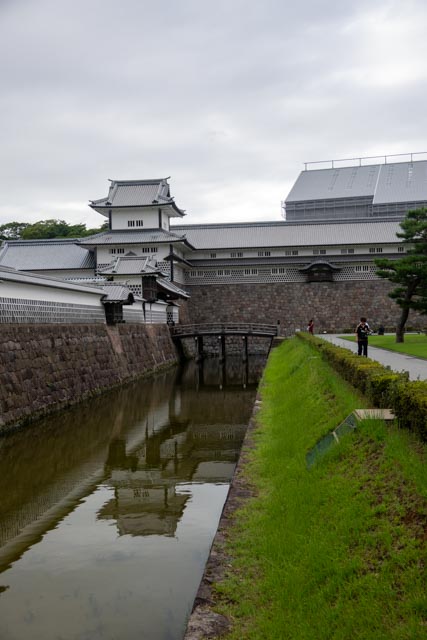
Kanazawa Castle
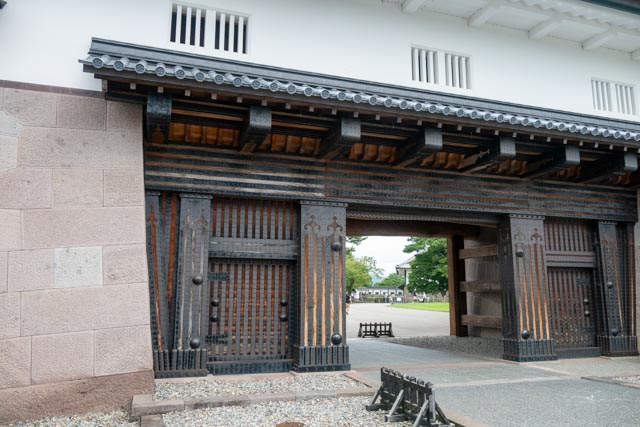
Established in the late 1500s as the seat of the Maeda Clan, Kanazawa Castle has a turbulent history marked by repeated fires and rebuilding. A lightning strike destroyed the castle keep in 1602, and major fires in 1631 and 1759 took most of the original structures.
After the Meiji Restoration, the site was taken over by the Imperial Army, and then another devastating fire in 1881 destroyed much of the remaining complex. In the 20th century, the grounds served as the campus of Kanazawa University before the site was designated a National Historic Site in 2008.
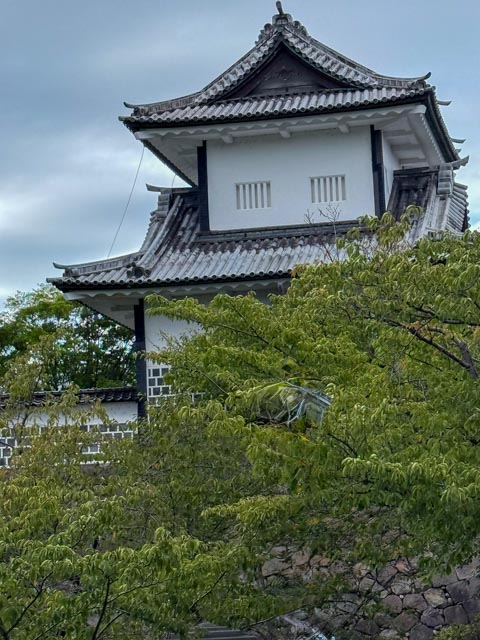
Although ongoing restoration limits what visitors can see inside, the buildings have a distinctive feature: whitish roof tiles made of lead. Local legend holds that, during a siege, the tiles could be stripped and melted down into ammunition.
The real highlight, though, is Kenrokuen Garden.
Kenrokuen Garden
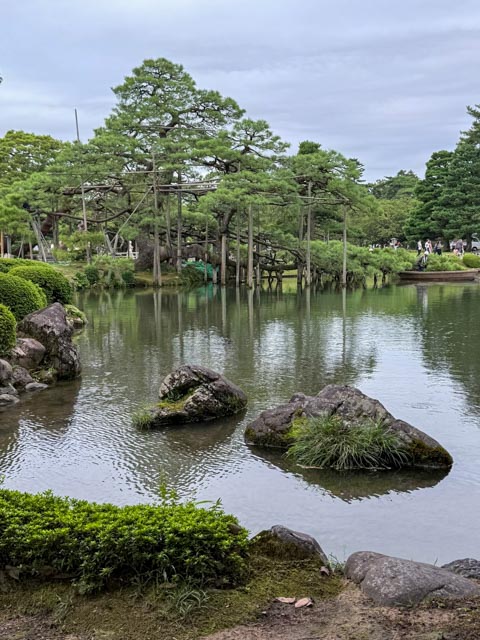
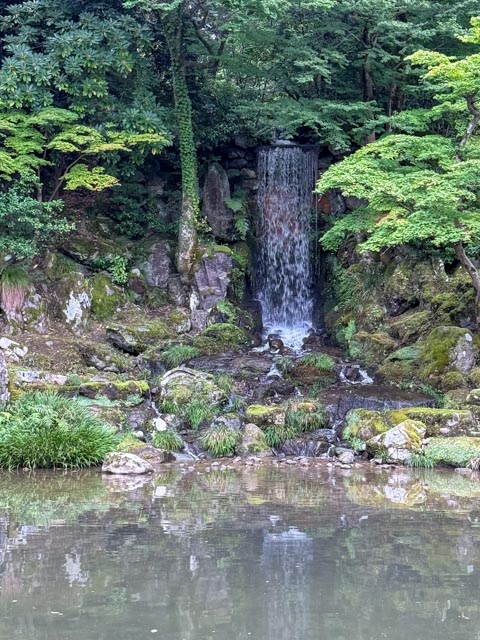
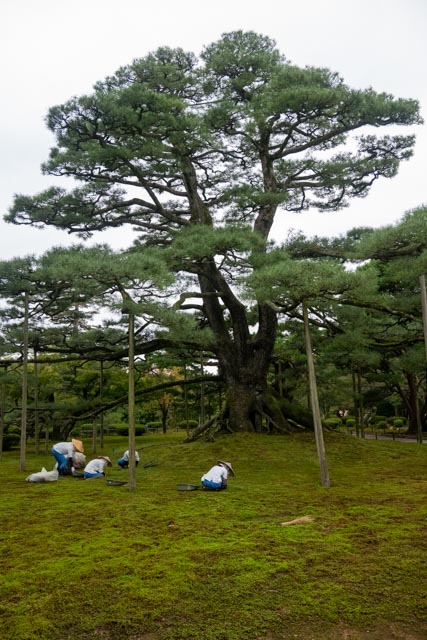
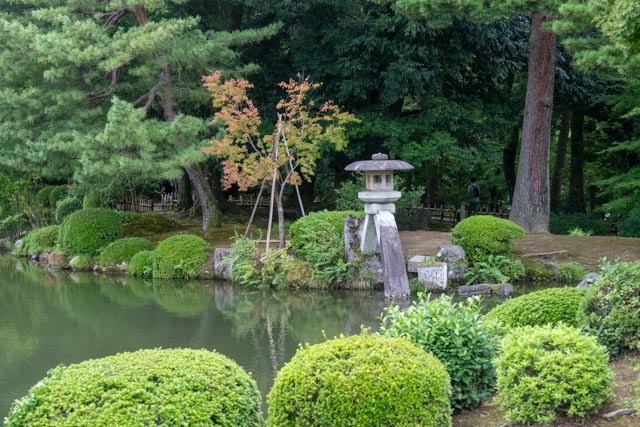
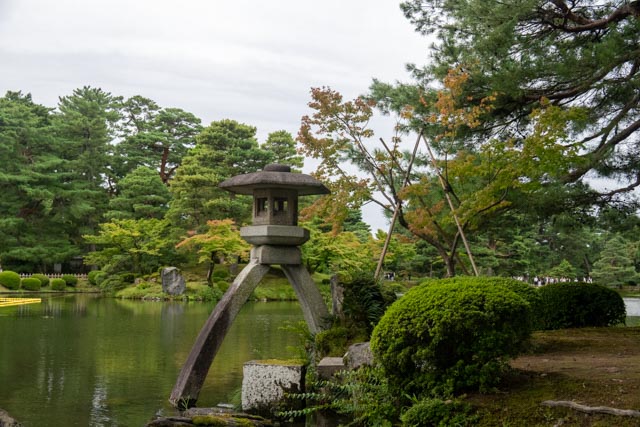
Just across the bridge from the castle, Kenrokuen is celebrated as one of Japan’s “Three Great Gardens,” alongside Kairakuen in Mito and Korakuen in Okayama.
The name Kenrokuen translates to the “Garden of Six Attributes,” drawn from a Song-dynasty Chinese landscape text that names six qualities a perfect garden should combine:
- Spaciousness
- Seclusion
- Artifice / Human Design
- Antiquity
- Waterways
- Panoramas
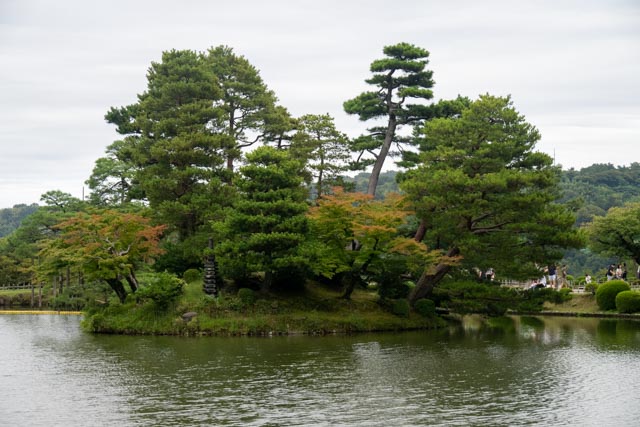
Spanning roughly 28 acres, the garden features winding stone paths, historic teahouses, ponds, and a fountain often described as Japan’s oldest, powered only by natural water pressure.
Though often overshadowed by Kyoto, Kanazawa is worth a visit, and for more than a day.


Leave a Reply