
Guangzhou, long known to the West as Canton, has been China’s gateway to the sea for more than 2,200 years, from the Maritime Silk Road to the Qing dynasty’s “Thirteen Factories” system, when it was the main port open to Western trade. Today it still bridges its Cantonese roots and a modern skyline.
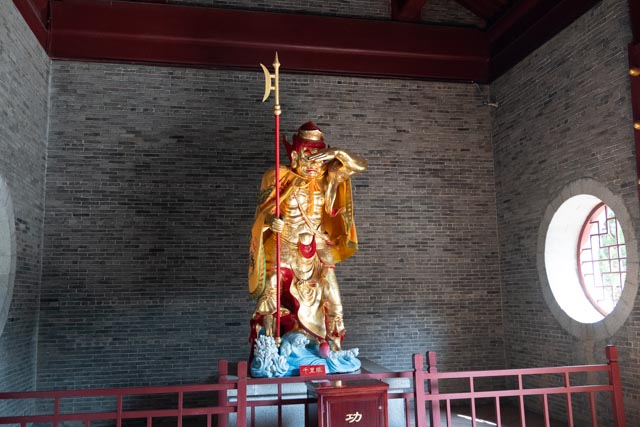
Driving in from the port, we started our tour at Chisong Palace. The palace is a rebuilt Taoist complex in Tang-dynasty style, with red walls, black tiles and sweeping flying eaves. The grounds are laid out in the shape of a gourd, with a gourd-shaped pool that sprays mist at intervals. It is linked to the Taoist immortal Chisongzi and holds a golden statue of Wong Tai Sin.
From there we went to Shamian Island. This quiet, leafy pocket of the city was carved out as a British and French concession in 1859. The Pearl River Promenade runs along its edge, past tree-lined avenues and European-style stone mansions and classical architecture, a world away from the mainland side.
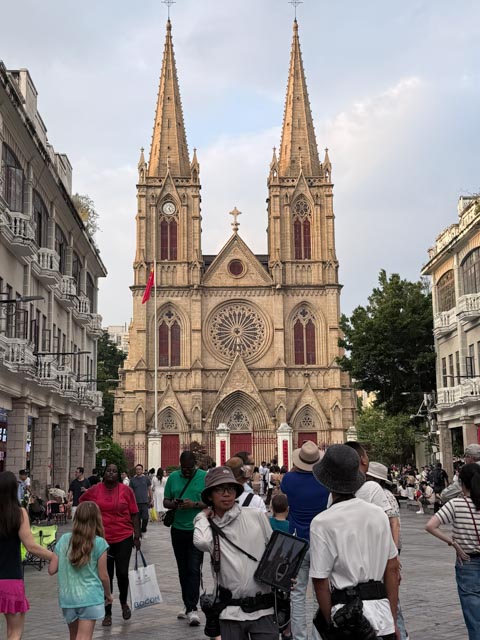
Driving through the city we came to the Sacred Heart Cathedral. The cathedral, locally known as the “Stone House” (Shishi), is a Gothic Revival masterpiece completed in 1888 after 25 years of construction. It is one of the world’s few cathedrals constructed almost entirely of solid granite, featuring twin 58-meter spires, a large rose window, stained-glass windows, and vaulted ceilings inspired by European design. Standing amidst a wholesale market district, it remains a tranquil architectural centerpiece.
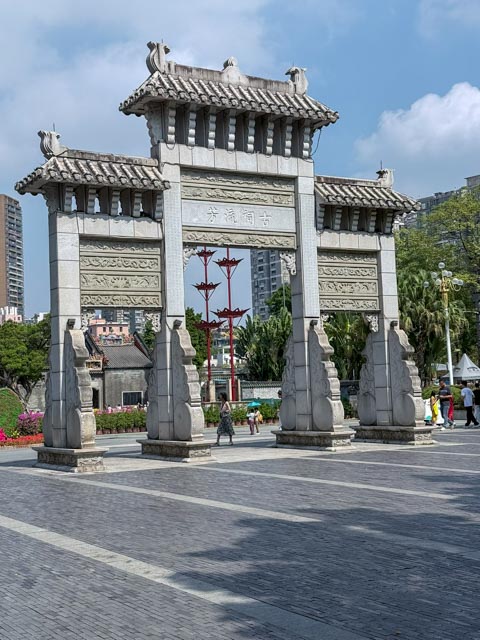
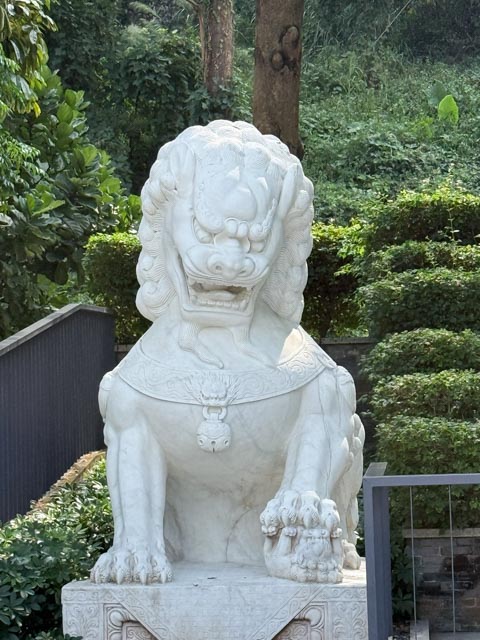
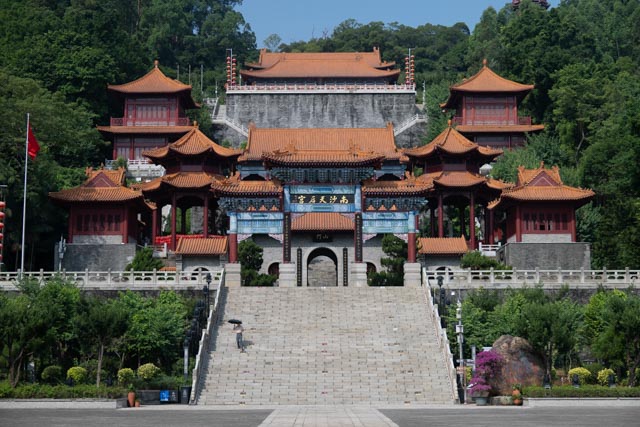
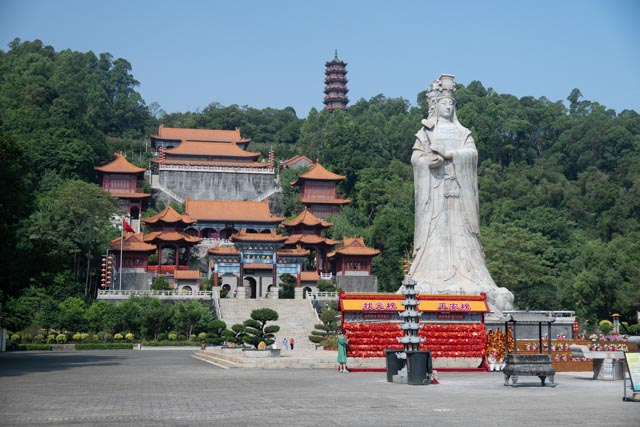
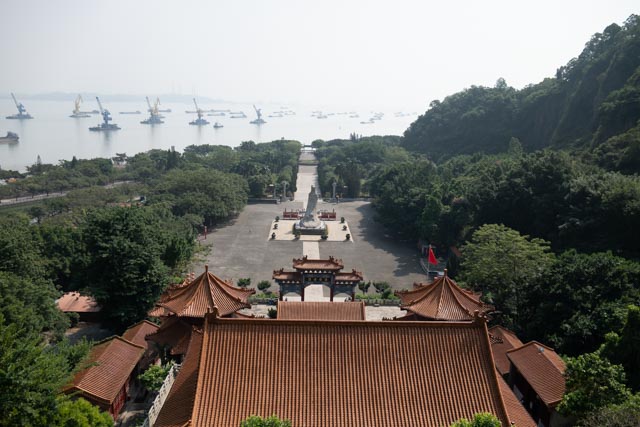
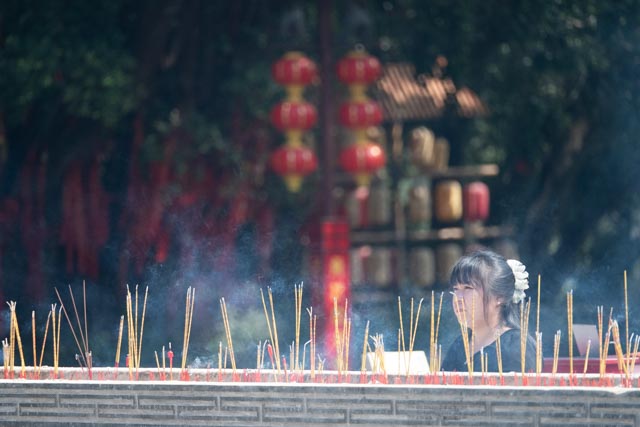
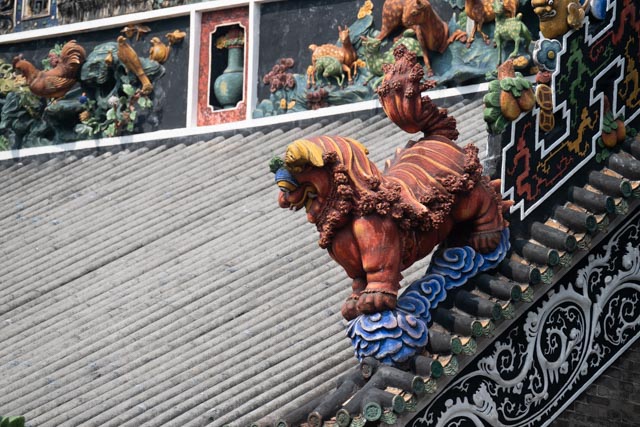
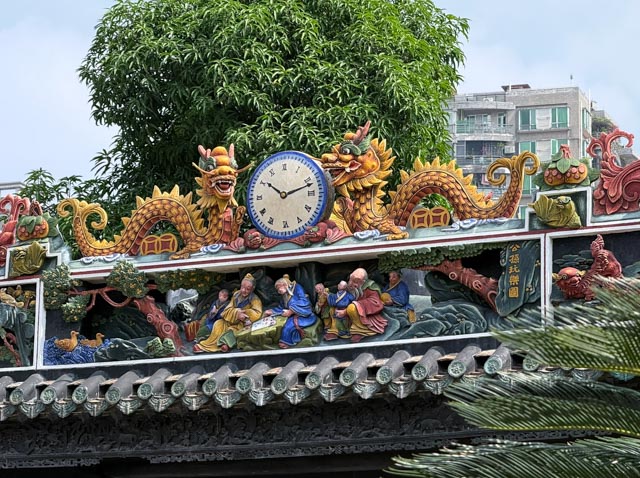
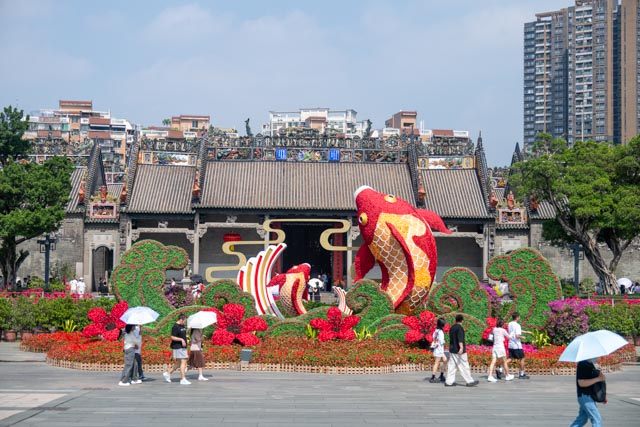
We spent our second morning in Guangzhou on a photo walk to the Nansha Tin Hau Temple. Positioned where the Pearl River meets the South China Sea at Mount Dajiao, the temple is a grand complex dedicated to Mazu, the sea goddess who guards seafarers. Billed as one of the largest Mazu temple complexes in the world, it has Lingnan-style pavilions that rise in terraces up the hillside toward the 45-meter Nanling Tower. Lingnan is the traditional name for China’s far south, and its temples are known for richly carved wood, brick and stone. A 14.5-meter granite statue of Mazu stands at the complex, looking out over the surrounding coastal estuary and the ships in the harbor. Richard climbed most of the way up to take more pictures, while I stayed behind and watched from a shady spot.


Leave a Reply